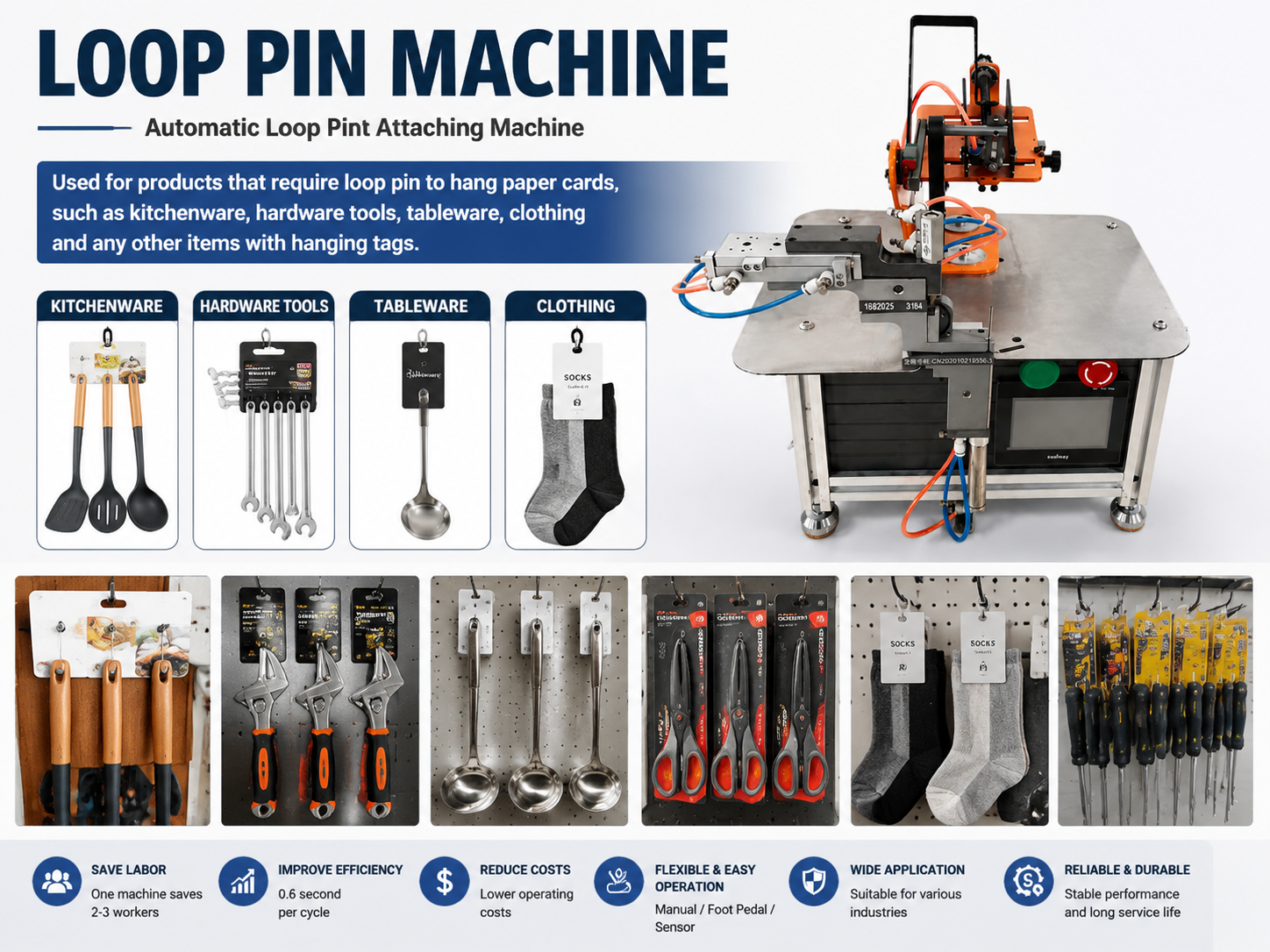
For B2B packaging managers and procurement teams, shifting from blister packaging to paper card packaging is a growing priority driven by cost, sustainability, and consumer demand. At the center of this transition is the elastic staple machine for fixed label card, a critical piece of equipment that ensures secure, efficient label and card attachment. Before making the switch, it’s essential to evaluate key factors that impact production, cost, and compliance to avoid costly disruptions.
1. Cost and ROI Analysis for Packaging Transition
Switching packaging formats requires a clear financial assessment to ensure long-term value.
Initial Equipment Investment vs. Long-Term Savings
The upfront cost of an elastic staple machine for fixed label card is a primary consideration, but it’s important to weigh it against long-term savings. Paper card materials are 30-50% cheaper than blister plastic, and elastic staple machines reduce material waste by eliminating excess plastic trim. For high-volume B2B operations, these savings can offset equipment costs within 12-18 months.
Maintenance and Operational Costs
Ongoing maintenance is another key factor. Machines like the VNS elastic staple machine for fixed card label are designed for low maintenance, with durable components that require minimal servicing. Unlike blister packaging lines that need frequent mold replacements and heat sealer repairs, elastic staple machines have fewer moving parts, reducing downtime and operational costs.
2. Production Efficiency and Line Compatibility
A smooth transition depends on how well new equipment integrates with existing production workflows.
Packaging Line Integration Requirements
Before purchasing an elastic staple machine for fixed label card, assess your current production line layout and speed. Most models are adjustable to fit standard conveyor heights and can sync with existing filling or assembly lines. For custom setups, look for machines with modular designs that can be modified to match your line’s specifications.
Output Speed and Scalability
B2B operations often need equipment that can scale with demand. High-speed elastic staple machines can process 60-120 cards per minute, matching or exceeding the output of many blister packaging lines. If your business has seasonal peaks, choose a machine with adjustable speed settings to handle both low and high-volume runs efficiently.
3. Packaging Quality and Product Protection
Paper card packaging must maintain product integrity and brand presentation, just like blister packaging.
Label and Card Secure Attachment
The primary function of an elastic staple machine for fixed label card is to ensure labels and cards stay attached through shipping and handling. Elastic staples provide strong, flexible hold that resists tearing, unlike adhesive labels that can peel in extreme temperatures. This is especially critical for B2B shipments that go through multiple distribution channels.
Brand Presentation and Customization
Paper cards offer more surface area for branding and product information compared to blister packs. Elastic staple machines work with a variety of card materials, from coated cardboard to recycled paper, allowing for full-color printing and custom die-cuts. This helps B2B brands enhance shelf appeal and communicate key product benefits more effectively.
4. Sustainability and Regulatory Compliance
Eco-friendly packaging is no longer optional for B2B brands, and regulatory requirements are tightening globally.
Environmental Impact Reduction
Switching to paper card packaging with an elastic staple machine for fixed label card significantly reduces plastic waste. Paper cards are 100% recyclable, and elastic staples are often made from recyclable materials as well. This aligns with consumer demand for sustainable packaging and helps B2B companies meet corporate ESG goals.
Global Packaging Regulations
Different regions have varying packaging regulations, especially regarding plastic use and recyclability. For example, the EU’s Packaging and Packaging Waste Regulation sets strict recycling targets, and many U.S. states have plastic ban laws. Paper card packaging with elastic staple fastening helps B2B companies comply with these regulations and avoid potential fines.
READ MORE:
- Why Adding 5 Packers Fails? Elastic Staple Pin Roll for Toys Packing Guide
- Elastic Staple Pin Roll for Quickly Packing: 1 SKU to 30 SKUs Impact
- Why Great Hardware Fails at Packing: Elastic Staple Pin Roll for Hardware Packing
- Elastic Staple Pin Roll vs Cable Ties vs Paper Twine: Pick Right Fastener
- VNS Elastic Staple Machine Pre-shipment Testing Full Guide
- VNS Elastic Staple Machine Replace Cable Tie: EU Client’s Switch
- Why Toy Factories Fail to Boost Output: VNS Elastic Staple Machine for Toys
- Pneumatic Elastic Staple Machine for Toys vs. Labor: Which Costs More?
- 5 Overlooked Packaging Costs for Toy Factories & Pneumatic Band Stapler for Toys Fix


